Shiva Lingashtakam
शिव लिङ्गाष्टकम्
Shiva Lingashtakam is a sacred Sanskrit hymn composed by the great sage Adi Shankaracharya, dedicated to Lord Shiva in the form of the Shiva Linga, which is a symbolic representation of Shiva and the cosmic principles of creation and dissolution. The term “Ashtakam” refers to a composition of eight verses or stanzas, and this particular one praises the eternal Shiva Linga, highlighting its spiritual significance and the divine qualities of Lord Shiva it represents.
Meaning and Significance
The Shiva Lingashtakam venerates the Shiva Linga as the symbol of pure consciousness and bliss, embodying the union of Shiva and Shakti, the masculine and feminine cosmic energies. It recounts various legends associated with the Linga, including the cosmic contest between Lord Brahma and Lord Vishnu over the origin of the universe and the manifestation of the infinite Shiva Linga as a pillar of light with neither beginning nor end.
The verses describe the Linga as:
• Adored by gods like Brahma, Vishnu, sages, and celestial beings
• Destroyer of birth-related sufferings and the pride of demons like Ravana
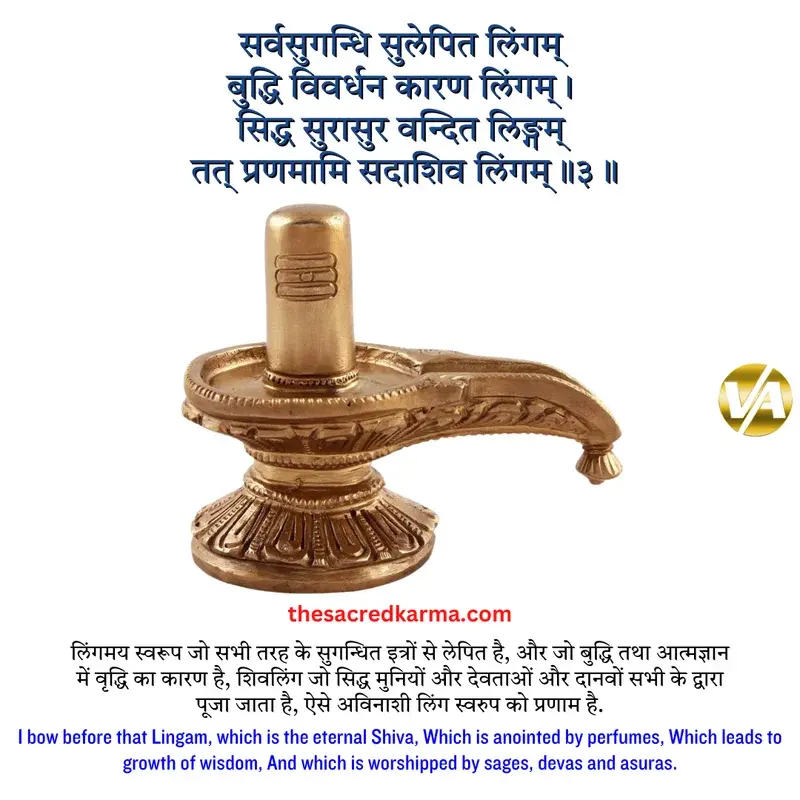
• Adorned with sandalwood, sacred ash, kumkum, and surrounded by fragrant flowers
• Radiating brilliance comparable to a million suns
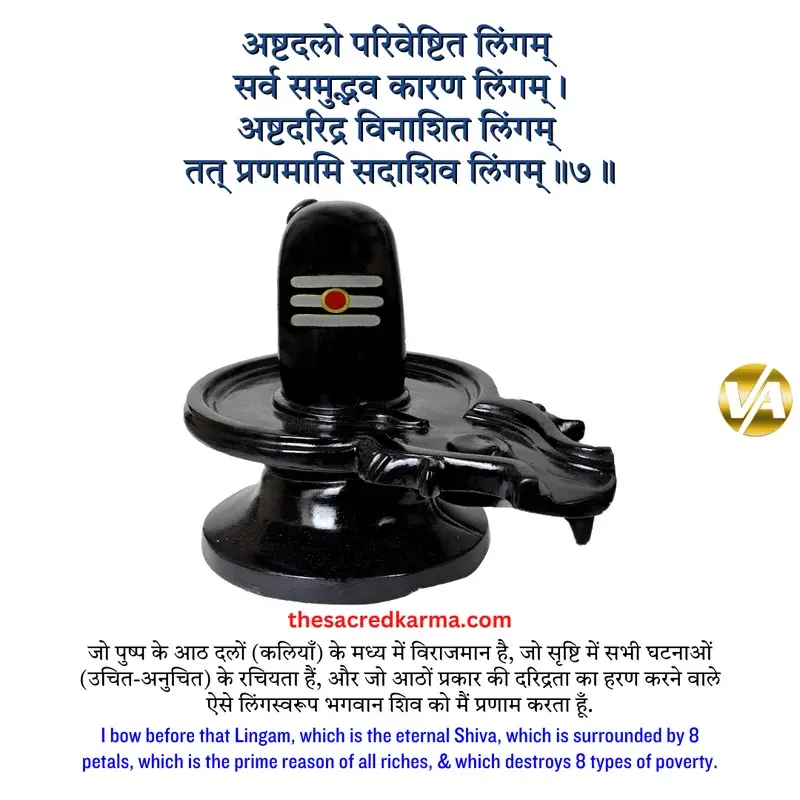
• Destroyer of the eightfold sufferings and provider of liberation and eternal bliss.
Spiritual Practice
Reciting the Shiva Lingashtakam with devotion, particularly during auspicious times like the month of Shravan or Maha Shivaratri, is believed to invoke Shiva’s blessings, purify the devotee’s mind, and lead to spiritual growth and liberation (moksha). It is commonly chanted during Shiva Puja rituals in front of the Shiva Linga to express faith, obedience, and devotion.
In summary, Shiva Lingashtakam is a powerful devotional hymn that praises the divine Shiva Linga, symbolizing the eternal, infinite Shiva, and helps devotees deepen their spiritual connection and attain divine grace through sincere worship.